Public Health Significance of the White-Tailed Deer and its role in the eco-epidemiology of tick- and mosquito- borne disease in North America
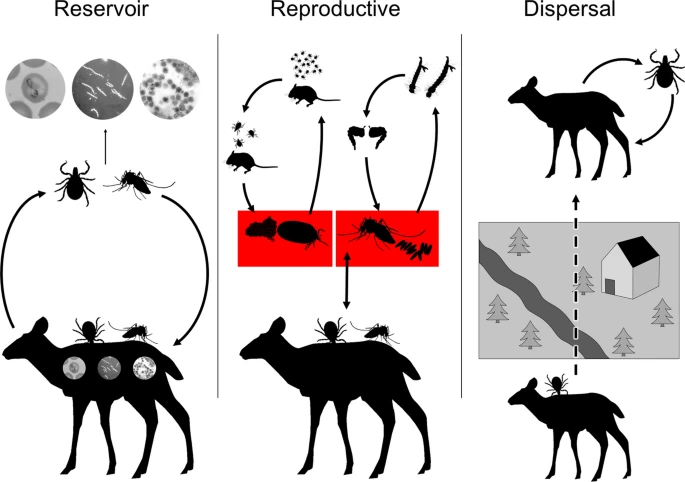
Reviewing the public health importance of white-tailed deer (Odocoileus virginianus) in North America and their role in the eco-epidemiology of tick- and mosquito-borne diseases. Highlighting that these deer are widespread and have high reproductive capacity, allowing their populations to grow rapidly. Their biological traits and behaviors influence how they interact with disease vectors (ticks and mosquitoes) and pathogens.
The review aims to characterize the complex interactions between deer, vectors, and pathogens, particularly across the eastern United States and southeastern Canada, where these dynamics play a significant role in disease transmission cycles.